
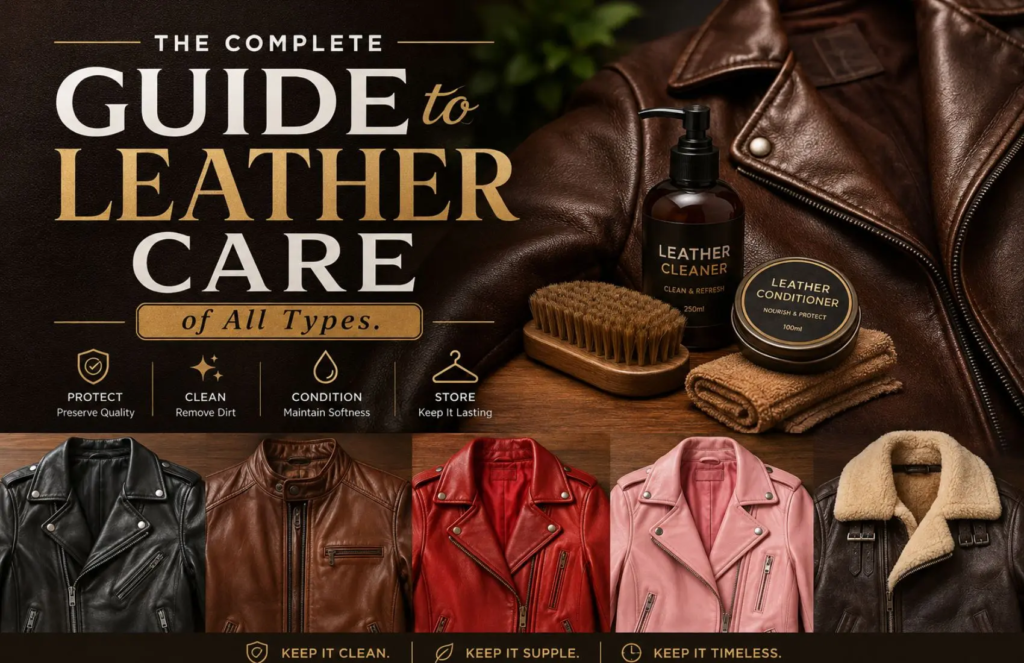
A leather jacket is a staple in every man’s and woman’s wardrobe which in turn instant transforms an outfit. From black to red, pink to brown and including the classic biker style what you wear under is important but how you care for it is key to it’s look and longevity. Unlike other fabric jackets which may be washed and worn more freely, leather is a finicky material that does best with a gentle hand at clean up time as it does in storage. Also keep in mind that the use of rough products, too much water, and vigorous scrubbing will do in fact damage the finish.
Stain issues are what most leather jacket owners deal with. Food messes, oil, grease, ink, make up, mud, rain damage, and every day grime leave marks. Also that which we put out into the world can leave a mark on the material. But which is great news is that many of these stains you can treat at home if you use the right approach and do it at the first sign of the issue. The key is to identify what the stain is, use a very gentle cleaning process and to stay away from anything that will remove the natural oils from the leather.
This in depth guide goes over what you need to know to get rid of stains in a Cafe Racer Leather Jacket safely, we also cover various methods for different types of stains. Also we go into care of leather jackets, what not to do in terms of cleaning, and advice on how to keep your favorite jacket in great condition.
Leather Jacket Stain Care.
Leather is a natural material which has a unique look and feel. Out of cotton or polyester it does not go in the wash machine when it gets dirty. Also if it is exposed to too much moisture or powerful cleaning products it will cause the leather to dry out, become stiff, fade, crack, or change color.
This is a particular issue with colored leather jackets. A Red Leather Jacket or a pink one for example may require extra care as some cleaning agents will damage the color. Also black leather jackets may end up with dull spots if you use the wrong cleaning products.
Before treating a stain, see the manufacturer’s care label. If the Biker Leather Jacket is of delicate leather like lambskin or has a special finish, professional leather cleaning is the best option.
What you should do before removing a stain.
First out of the gate is to attend to the issue as soon as it happens. Also it is a rule of thumb that recent stains do in fact go easier compared to those which have had time to sit on the leather for days or even weeks. But also it is important to not jump into the clean up process before you identify what you are working with which in turn may cause more damage than the stain itself.
Start out by cleaning out any loose dirt or debris from the surface. Don’t go right in to soak the affected area. Instead use a soft dry cloth to wipe off or lift what is on top of the leather.
Before application of any cleaning product test it out on an unnoticeable part of the jacket. For colored leather, suede, nubuck and jackets with complex finishes this is very important.
Basic items you may need: Basic things you will need:
- Soft microfiber or cotton cloth
- Lukewarm water
- Mild leather cleaner
- Leather conditioner
- Soft-bristled brush
- Clean sponge
- Dry towel
- Leather protectant
Stay away from rough bristle brushes, abrasive sponges, bleach, strong detergents or household chemicals unless the label says it is okay.
How to Clean out Everyday Stains from a Leather Jacket.
For daily use on dirt and small marks, you do not require a tough cleaning approach. Use a little of mild soap or leather cleaner in some luke warm water out as the instructions say.
Dip a soft cloth in the solution and ring it out well. The cloth should be damp not wet. Gently wipe the stained area with small circular motions which should be without force.
Once you notice the mark is gone use a different clean slightly wet cloth to wipe at any residual cleaner. Gently press out a towel on the area which is affected and allow the jacket to dry out naturally.
This works for everyday wear marks on black leather jackets, brown leather jackets, and also other smooth leather styles.
How do you get rid of oil and grease stains on leather?
Oil and grease marks tend to be more difficult as leather will absorb those substances. It is very important to not rub in the stain.
If you have fresh oil based spill on your leather work a soft dry cloth in a gentle blotting motion. Do not rub. Also you may use an absorbent powder which is suggested for leather care to remove the extra oil, do to that out of what works best for your leather we recommend you check the product label first.
After you use the product as directed, gently remove any residue and if needed use a proper leather cleaner.
For pricey and very soiled Brown Leather Jackets professional cleaning is the better choice than trying out home remedies.
How do you get ink out of a leather jacket?
Ink is very tough to remove from leather. Also we have had bad results with products that either spread the ink around or which remove the leather’s color along with the stain.
Instead of a vigorous rub go for a gentle blot of the stain if it is still fresh. Also do not immediately reach for alcohol, nail polish remover, acetone or any other strong solvent which may damage the finish.
If the stain has soaked into the leather which is the case with our leather coat and also our pink leather jacket of which we have a few that we love — for those professional leather cleaning products will be your best bet. Also for very colored leathers like red and pink do in home remedies may leave you with a large faded spot.
How to get out of food and drink stains.
Food and drink messes are very common in the case of wearing a leather jacket out or while traveling. It is best to immediately attend to the spill before it dries.
Use a clean cloth to gently blot out the liquid. Do not rub which in turn will spread the stain to a larger area. After you remove the excess do a cleaning with a product that is safe for leather as per the care instructions.
For dry foods, brush off the residue very gently do not scrape the leather. A damp cloth may be used to soften the mark first before cleaning.
After treatment let the jacket air dry and if it is of a type that requires it apply leather conditioner.
How to Clean Mud out of a Leather Jacket.
Mud should have time to dry before you go at it with a rag, in particular on smooth leather. If you try to wipe it when it’s still wet you run the risk of spreading the mess around which only makes the issue worse.
Once dry softly brush out or remove loose dirt with a soft brush or cloth. For any which remain use a leather safe cleaner.
For a biker jacket which is a home to more of that dirt and road dust we see with regular wear, it is much better to do light cleaning often as opposed to letting the grime build up over time.
How to Deal with Water Marks
Leather jackets will get water spots after they come in contact with rain or from an accidental spill. For removal of spots don’t use high heat to dry them out instead let the jacket air dry at room temperature.
Do not put a leather jacket near a radiator, heater, fireplace, or hair dryer. High heat will dry out the leather and cause it to crack or become stiff.
Once leather marks remain after the jacket has dried out, use a product which is a leather cleaner or conditioner that is appropriate for the type of leather you have.
Cleaning Different Leather Jacket Colours
Different shades of leather react differently to cleaning products. A black leather jacket is very forgiving for that which is minor in nature like surface dirt, but at the same time some harsh cleaners can still leave you with dull or uneven patches.
A red leather jacket is affected by improper cleaning products which may cause color change. Before cleaning visible areas do a patch test.
In the case of a pink leather jacket including pastel and light shades the same goes. What you see as stain may be more visible on light colors and some heavy cleaning may in fact cause discoloration.
It is best to use products that are specially made for leather and to follow the manufacturer’s care instructions.
Issues to Watch Out For When Cleaning Leather Jackets.
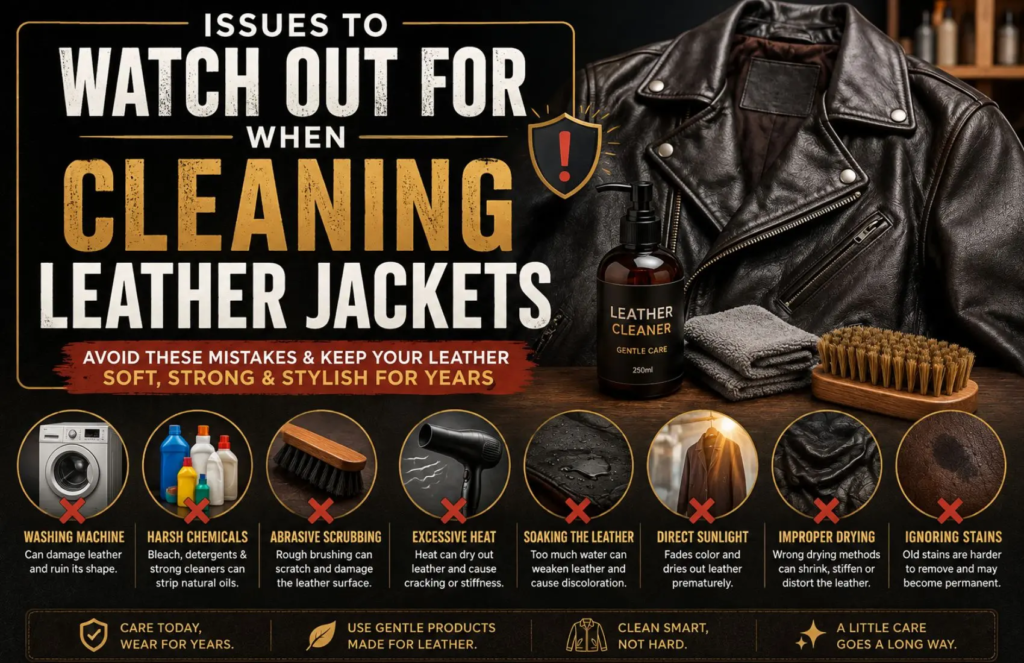
Many issues with leather jackets are due to the fact that people treat leather as they would any other garment. What works for cotton or man made fibers is often too aggressive for natural leather.
Avoid these common mistakes: Steer clear of these issues:
- Do not wash your leather jacket unless the manufacturer has specified that it is safe to do so.
- Do not soak leather in water.
- Do not scrub stains aggressively.
- Do not use bleach or harsh detergents.
- Do not use acetone or nail polish remover unless you are advised to do so by a professional.
- Do not put leather right on a heat source.
- Do not over dry.
- Do not use a non tested cleaning agent on an open surface.
- Do not wait until stains set in.
Cleaning and Care of Your Leather Jacket.
Cleaning is a first step in leather care which does indeed remove surface dirt, but also do proper after care which will keep the leather in good health. Once your jacket is fully dry out, check to see if it requires conditioning. A good quality leather conditioner may help to maintain soft texture and also reduce the issue of dryness, but always make sure it is the right product for your type of leather.
Regular care is better than an in depth clean. For your leather jacket use a wide and stable hanger to help it keep its shape. Also avoid folding it up tightly for long times which will in particular damage if the leather is a tend to crease.
Keep out of direct sunlight for long periods of time and stay away from high humidity. In rainy areas which see that a lot of action put a good quality leather protectant on it as per the manufacturer’s instructions.
Simple leather jacket care routine: Easy leather jacket care:
- Immediately address small marks.
- Use leather-specific cleaning products.
- Condition leather when appropriate.
- Hang the jacket on a strong hanger.
- Keep it away from direct heat.
- Protect it from prolonged moisture.
- Avoid overcrowding it in your wardrobe.
- Follow the manufacturer’s care instructions.
How to care for your leather jacket?
There isn’t a set cleaning schedule for all leather jackets. What you do to yours is based on how much you wear it, the environment it is in, and the type of leather.
If you put on a biker jacket for outdoor wear it may collect more dust and road grime than one which is worn in more of a casual setting. At that point light surface cleaning may be done as needed.
Deep cleaning is a practice which should be avoided at times. Over cleaning will remove natural oil and in turn damage the leather’s finish. Rather, focus on spot cleaning and regular care.
When do you take a leather jacket in for professional repair?
Some stains are very hard or not safe to treat at at home. If the stain is large size, old, well into the material, or is that of ink, paint, chemical, or strong oil origin, professional leather care may be the best choice.
Professional which is what you want from your cleaner as they know what works best for which type of leather that you have. This is very true for high value real leather jackets, vintage items, suede jackets, or those bright colored jackets which require color restoration.
If in doubt of a cleaning products safety, it is best to not use it on an expensive jacket.
Conclusion
Tackle spills at once, go easy with the cleaning, and use products that are specially for leather.
Steer clear of over time in the water, use of hard chemicals, aggressive scrubbing, and direct heat. For optimal results use regular maintenance, proper storage, conditioning, and care for spot issues which will have your leather jacket looking and feeling great for years.
Of course first to note is that which type of leather you have at hand before you do anything. Also with valuable, delicate, vintage, or very damaged jackets it is best to use professional care which in turn will avoid you doing any harm and will give you better results.
FAQ
Q1: May I put my leather jacket in the washing machine?
A: Do not submerge your leather jacket in water. For which is a minor surface issue use a damp cloth instead, if the manufacturers’ care advice says it is ok to do that. Also always air dry the jacket out.
Q2: May I put my leather jacket in the washer?
A: In most cases we do not wash. Washers present an environment of excess water, friction, and chemical detergents which in turn may harm the leather’s texture, finish or shape. Also see the care label.
Q3: How to get rid of an oil stain on a leather jacket?
A: Blot out fresh oil with a clean cloth instead of rubbing it. For persistent oil marks try a leather safe treatment or take it to a professional leather cleaner.
Q4: May I use vinegar to clean a leather jacket?
A: It is best to avoid using home made vinegar solutions. Some leather types react badly to household acids and do it yourself cleaning products.
Q5: How to clean a black leather jacket?
A: For gentle cleaning of light soil use a soft cloth and a suitable leather cleaner. Stay away from strong detergents and excessive moisture which will cause the leather to appear dulled or dried out.
Q6: What is the best way to clean a red leather jacket?
A: Use the appropriate cleaner for colored leather and do a patch test first. This will help reduce fade and color variation.
Q7: What is the proper way to clean a pink leather jacket?
A: In that which is of light color stain and discoloration show up more easily, use a gentle leather specific cleaner and always do a patch test before treating the visible surface.
Q8: Can I use a hair dryer on my leather jacket?
A: It’s better to avoid direct heat. Allow the jacket to air dry at room temp as extreme heat will dry out the leather and cause it to crack or become stiff.
Q9: What can I do to prevent my leather jacket from getting stained?
A: Routine care and proper leather protectant will do a great job at reducing staining. Also avoid that your jacket comes into contact with liquids, oils, and harsh products as much as possible, and attend to any spills right away.
Q10: What is the longevity of a leather jacket?
A: A quality leather jacket will wear well for years with proper care. What it’s made of, how it is put together, how often you wear it, how you store it and your care routine all play into its lifespan.